High-Voltage DC/DC converters up to 1,000 VDC –
Products, platform, and selection criteria
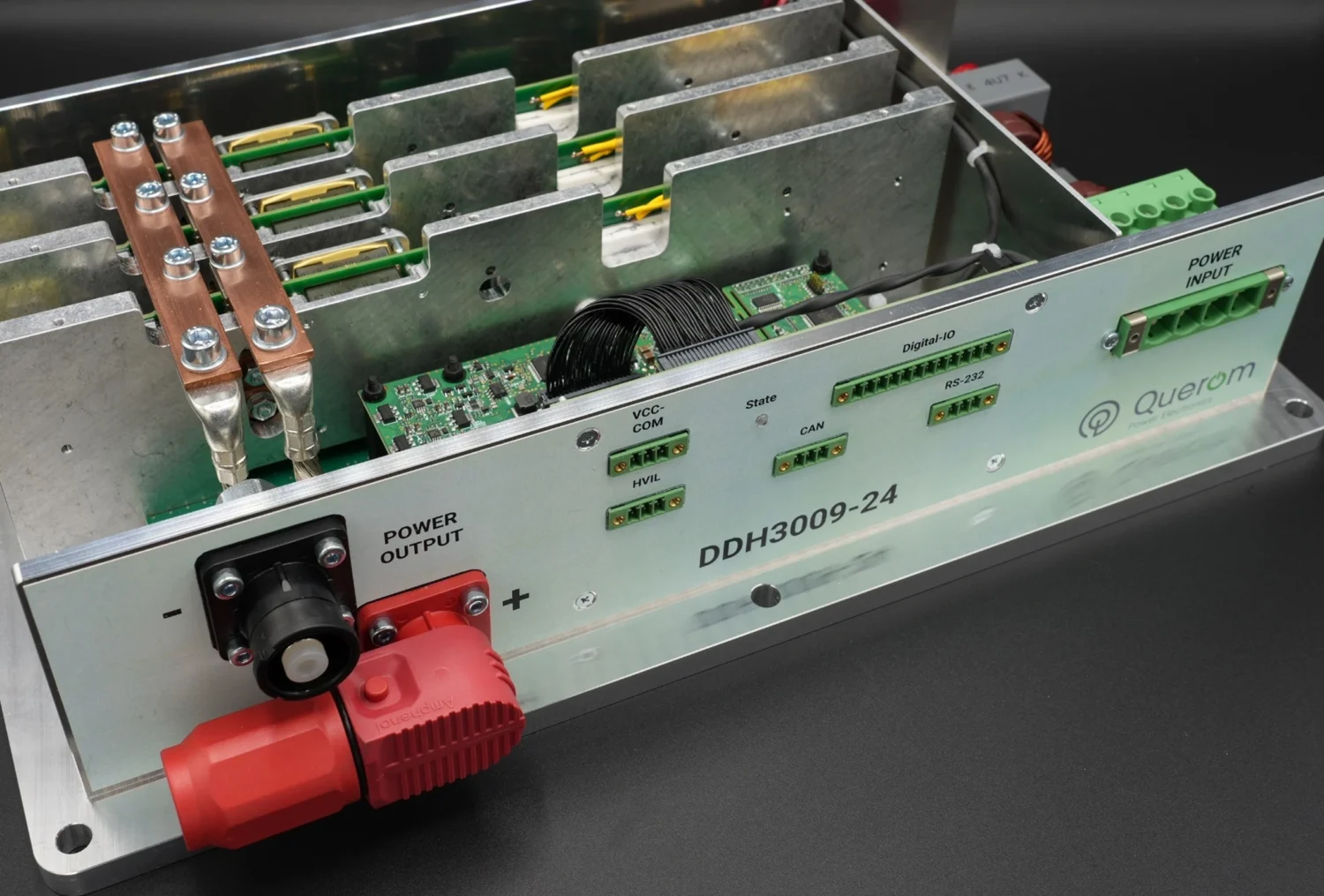
A high-voltage DC/DC converter transfers electrical energy between two DC power supplies whenever at least one of the two sides exceeds the SELV limit of 60 VDC. At Querom, we offer a modular HV platform for this voltage class that converts input voltages up to 1,000 VDC to typical vehicle electrical system voltages of 12 V, 24 V, or 48 V—galvanically isolated, with CAN bus, digital I/O, and RS-232 as standard interfaces. At the heart of the platform are the DDH3009-24, an isolated high-voltage converter with up to 3 kW boost power, and the DDH0015 (HV-AUX), a compact PCB module for the auxiliary power supply of internal control and sensor components. These converters are used in industrial DC grids, fuel cell systems, stationary battery energy storage systems (BESS), and in high-voltage electrical systems of commercial and specialty vehicles.
What is a high-voltage DC/DC converter?
A high-voltage DC/DC converter is a DC voltage converter whose input or output voltage exceeds the SELV threshold of 60 VDC. In industrial applications, input voltages typically range from 400 to 1,500 VDC; in photovoltaic strings, voltages as high as 2,000 VDC are also reached. Functionally, the converter chops the input voltage using switched semiconductors, transforms it via a storage inductor or an electrically isolating transformer, and smooths it on the output side to the desired target voltage.
Due to the high voltages, two features are mandatory for industrial use: galvanic isolation between the high- and low-voltage sides, as well as protection thresholds for overvoltage, undervoltage, and overtemperature (OVP/OCP/OTP). You can read more about design, topologies, and operation in our article on DC-DC converters in industrial environments.
Overview of Querom High-Voltage DC/DC Converters: DDH3009-24 and DDH0015
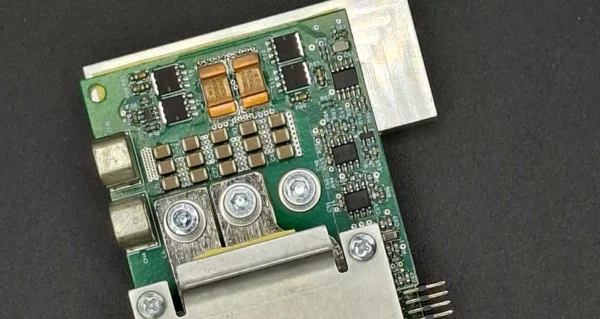
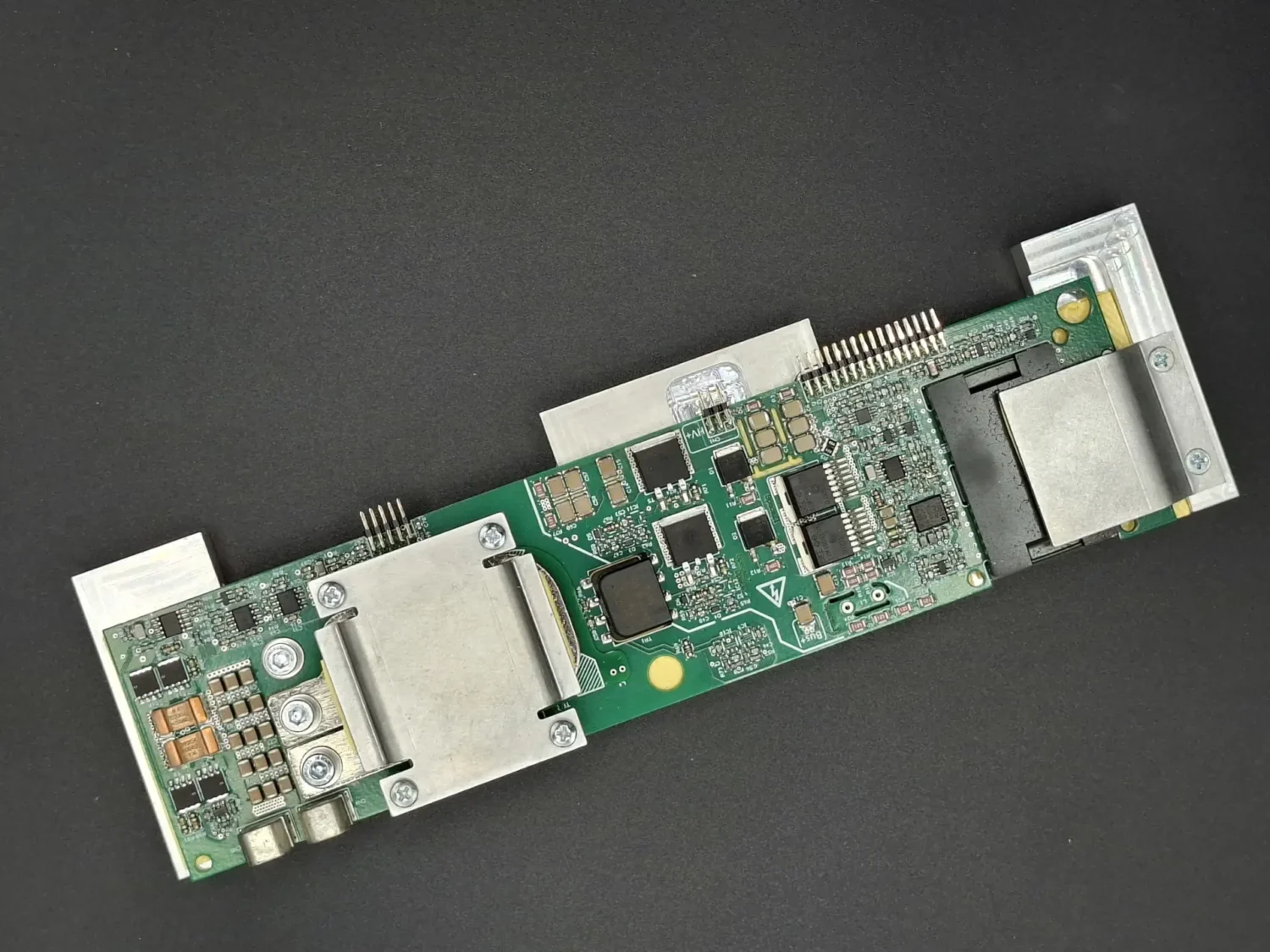
We offer two complementary products in the high-voltage class: the DDH3009-24 as the main power converter for power ratings up to 3 kW, and the DDH0015 (HV-AUX) as a compact PCB module for the auxiliary power supply of internal control and sensor components. Both devices are based on the modular Querom HV platform with a standalone control module and an electrically isolated power section.
DDH3009-24 – High-voltage DC/DC converter 500–900 VDC
The DDH3009-24 is an isolated high-voltage DC/DC converter from the Querom HV platform—designed to convert high-voltage input voltages of 500–900 VDC to a regulated low-voltage output in the range of 20 to 30 V. In rated operation, it delivers 0–83 A at 2 kW continuous power; in boost mode, the current range extends to a maximum of 125 A at up to 3 kW. Typical efficiency is 95%.
| Parameters | Min | Type | Max | Unit |
| Port A Input voltage | 500 | — | 900 | VDC |
| Port A Current limiting | 0 | — | 7 | A |
| Port A Insulation voltage (Withstand) | — | — | 4250 | VDC |
| Port B Output voltage | 20 | — | 30 | V |
| Port B Rated current | 0 | — | 83 | A |
| Port B Boost current | — | — | 125 | A |
| Port B Rated power | — | — | 2000 | W |
| Port B Boost power | — | — | 3000 | W |
| Efficiency | — | 95 | — | % |
| Ambient temperature | −25 | — | 100 | °C |
Three features set the DDH3009-24 apart in its performance class. First: the galvanic isolation between the input and output, with a withstand voltage of 4,250 VDC relative to the housing ground, eliminates ground loops and enables straightforward integration into existing control architectures. Second: multi-interface communication allows control via CAN 2.0 A/B (up to 1 Mbit/s), RS-232, or configurable digital I/Os—alternatively, the converter can also operate uncontrolled using an editable default parameter set. Third: the failsafe concept maintains all measurement and control functions even if the input voltage is briefly lost—a feature that is crucial in fault-tolerant industrial architectures.
You can download a DDH3009-24 datasheet here, via the product details page, or contact us directly using the contact form.
DDH0015 (HV-AUX) – Compact PCB module for high-voltage DC link auxiliary power supply
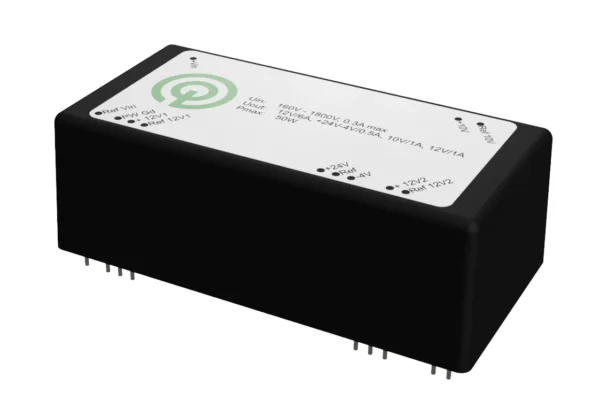
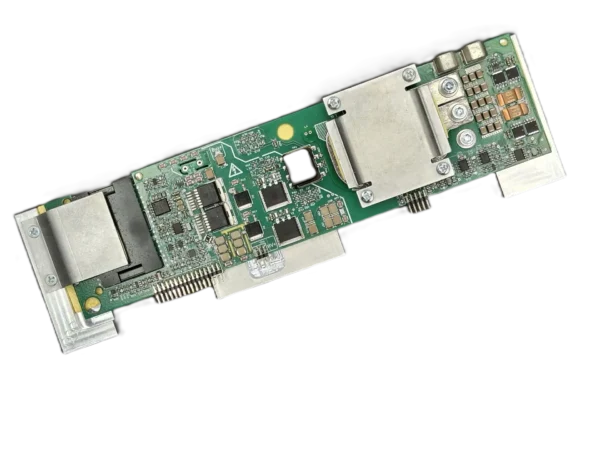
The DDH0015 is not a main power converter, but rather a compact PCB module—designed to provide auxiliary power to internal control, sensor, and driver components directly from a high-voltage (HV) DC link, a battery voltage, or a PV string voltage. Typical applications include inverter boards, battery management systems (BMS), and DC grid controllers, where MCU boards, displays, fans, or gate drivers for SiC semiconductors must be powered without requiring a separate 230V mains connection.
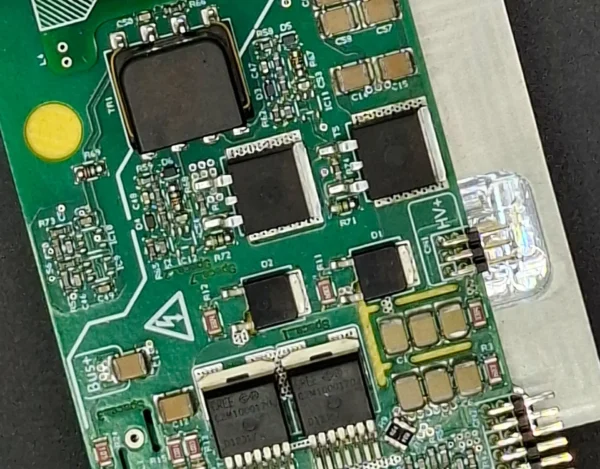
The DDH0015 handles input voltages ranging from 180 to 1,600 VDC, covering virtually every industrial high-voltage architecture, from 400-V vehicle electrical systems to 1,500-V BESS strings. On the output side, it provides four galvanically isolated supply branches, one of which serves as a bipolar supply for high-side SiC gate drivers. The total power output is approximately 40W with a total current of 3A across all four outputs. Unlike comparable modules on the market, the DDH0015 requires no additional external circuitry for inrush current limiting or EMC compliance—both features are already integrated onto the PCB module.
For more information about the DDH0015, please visit the product details page.
Voltage ranges of the Querom HV platform: 500–1,000 VDC input, 12–48 V output
The Querom HV platform handles input voltages up to 1,000 VDC and provides 12 V, 24 V, and 48 V output voltages. Which input range is actually relevant depends on the application—the following table lists the voltage classes we typically encounter in customer projects and specifies the recommended Querom configuration for each.
| Application class | Typical voltage range | Querom solution | Must-have feature |
| Photovoltaic string | 100 – 2.000VDC | DDH0015 (HV-AUX) | Wide-range input, MPPT connection |
| Fuel cell stack | 90 – 300VDC | Custom HV converter based on DDH | Load-dependent voltage sequence, black start |
| Stationary battery energy storage system (BESS) | 400 – 1.500VDC | Custom HV-converter (bidirectional) | Bidirectional, inrush current limiting, droop control |
| High-voltage electrical system (commercial vehicle, off-highway) | 400 / 800VDC | DDH3009-24 with 12/24/48 V output | Electrical isolation, high-voltage interlock |
The voltage ranges in this table are taken from our presentation at the MT DC Conference Munich 2024—they reflect current industry standards. For applications requiring high-voltage-to-low-voltage conversion, or conversely, a boost from 48V to high voltage, please contact us directly—the platform is also designed for such configurations.
Six Advantages of the Modular High-Voltage Platform
The Querom HV platform offers six features that make it ideal for industrial high-voltage applications—from individual projects to mass production.
Wider input voltage range:
500–900 VDC in the standard DDH3009-24 model, and up to 1,000 VDC in custom variants. This covers 400 V, 600 V, and 800 V vehicle electrical systems as well as 1 kV DC buses in industrial charging stations.
Freely scalable output voltage:
Regulated from 20 to 30 V – the modular architecture supports 12 V, 24 V, and 48 V output classes. Customizations for different target voltages are possible without changing the platform.
Mid-power sweet spot: 1 to 10 kW:
We serve the market segment where providers like Aradex (60 to 200 kW) are too large and pure low-power modules under 30 W are too small—the mid-range is the typical size for fuel cells, BESS strings, and auxiliary power supplies for industrial machinery.
Multi-interface ports:
CAN 2.0 A/B, RS-232, configurable digital I/Os, and high-voltage interlocks are integrated into the standard unit. A Modbus connection can be implemented as a custom option.
Industrial safety barriers:
Electrical isolation with a 4,250 VDC withstand voltage, overload and short-circuit detection on Port B, an HV interlock loop, and an optional design free of electrolytic capacitors for extreme temperature conditions.
Custom firmware available in small quantities:
Through our NRE engineering track, we implement hardware and software customizations—ranging from custom CAN profiles to modified current control systems—starting with industrial pre-production quantities.
This platform-based approach sets us apart from other suppliers, who target significantly higher power levels starting at 60 kW, or whose HV modules operate either in the sub-30 W range or at research voltages exceeding 1 kV. With our HV platform, we cover the industrial mid-power range from 1 to 10 kW—and flexibly expand it through customer-specific adaptations or the platform approach of our modular DC/DC converters.
Interfaces of the Querom HV platform: CAN, RS-232, digital I/O, Modbus, HVIL
The Querom HV platform supports five communication and safety interfaces, which are included in the standard unit as standard:
- CAN 2.0 A/B (up to 1 Mbit/s): Main bus for configuration, cyclic status polling, and integrated current control. Standard frame with an 11-bit identifier.
- Configurable digital I/Os: 6 digital inputs (one of which is a dedicated enable pin) and 4 digital outputs (open-drain) for hardware-based control without CAN communication.
- RS-232 (9.6 kbps): A standard serial configuration and diagnostic channel—useful in brownfield architectures without a CAN backbone.
- Modbus (as a custom variant): We implement Modbus RTU or Modbus TCP in NRE projects upon request—relevant for PLC-centric industrial architectures.
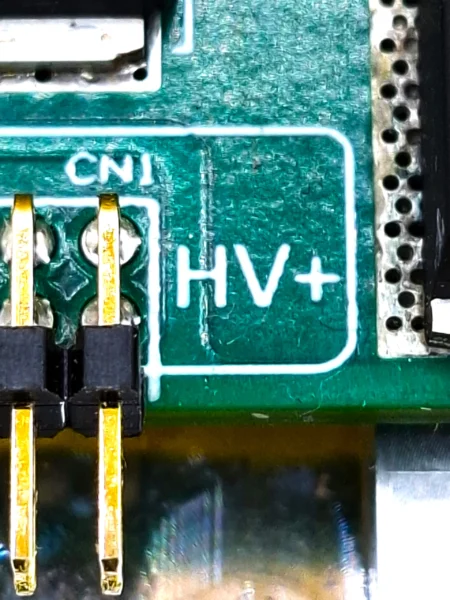
- HV Interlock Loop (HVIL): A safety loop that immediately de-energizes the converter if the HV connector is open or the service cover is missing – mandatory in every industrial high-voltage system.
High-Voltage Platform: Safety Mechanisms for Safe High-Voltage Operation
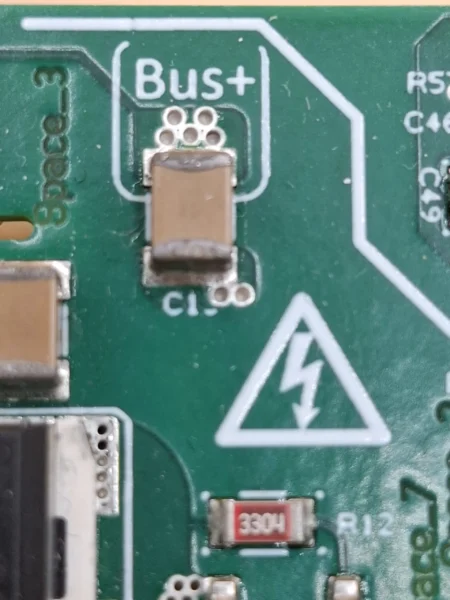
The safe operation of the Querom HV platform is based on five protective mechanisms that together meet industrial high-voltage requirements:
- Electrical isolation (galvanic isolation): The input and output are electrically isolated with a withstand voltage of 4,250 VDC relative to the chassis ground. Ground loops are eliminated, and the control side can be safely integrated into existing low-voltage architectures.
- HV Interlock Loop (HVIL): A hardware safety loop that de-energizes the device within milliseconds if a high-voltage connector is open or a service cover is missing.
- OVP / OCP / OTP: Overvoltage, undervoltage, overcurrent, and overtemperature protection operate in parallel on both the input and output sides. Short-circuit detection on Port B immediately interrupts the power flow in the event of a load fault.
- Soft start with inrush current limiting: When connecting capacitive loads, the converter limits the inrush current surge using a controlled ramp-up. This protects both the power source and the load from current spikes, which can also cause fuses to trip unnecessarily in high-voltage systems.
- Failsafe design: Measurement and control functions remain active even if the input voltage is temporarily lost—ensuring that diagnostic data remains available even in the event of a fault. In fault-tolerant industrial architectures (redundancy, fail-safe operation), this is a key differentiator.
Where are high-voltage DC/DC converters used in industry?
In industrial applications, high-voltage DC/DC converters are primarily found in four areas: industrial DC grids, fuel cell and hydrogen systems, stationary battery energy storage systems (BESS), and high-voltage electrical systems in commercial and specialty vehicles. The following sections highlight the specific requirements in each of these areas and explain the role that a high-voltage converter plays in them.
DC grids and industrial DC power grids
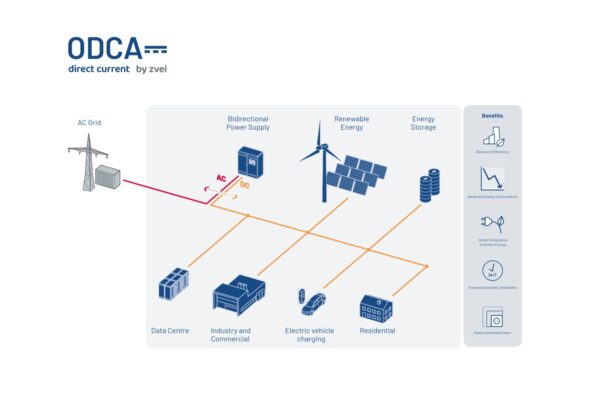
An industrial DC grid is a local direct current network into which generators (solar panels, fuel cells, generators), energy storage systems, and consumers feed power directly or draw power directly—without converting to alternating current. Typical voltage ranges today are between 400 and 800 VDC; new concepts for stationary storage and photovoltaics go up to 1,500 or even 2,000 VDC. In such a grid, high-voltage DC/DC converters handle the voltage conversion between the bus and the consumer—for example, from 1 kV to 24 V control voltage—as well as voltage stabilization via droop control. According to the trend report “Where DC Networks Will Be First to Take Hold” by Bayern Innovativ, the Sortimo charging park—with 84 charging points and a 1 kV DC busbar—achieved a reduction of approximately 50% in copper usage in the installation; at Schaltbau AG’s NExT-Factory, the connected load of the high-bay warehouse was reduced by about 85% via a DC network. A KUKA test cell also achieved approximately 20% energy savings via DC power supply in a standardized measurement cycle. The requirements were standardized at the end of 2024 with the publication of the ODCA pre-standard VDE SPEC 90037. You can find more about the architecture and advantages of industrial DC grids in our article “DC Grids in Industry.”
Fuel Cell and Hydrogen Systems
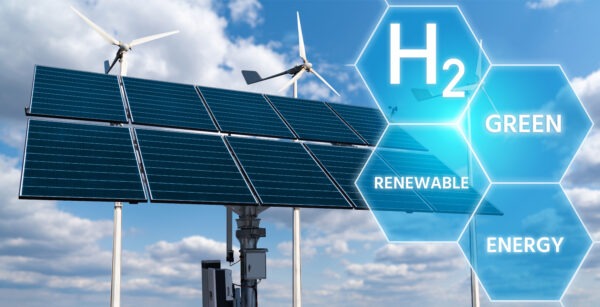
In industrial applications, the fuel cell stack is typically coupled to a battery—since fuel cells can only respond slowly to rapid load changes, the battery handles the dynamic load components. The DC/DC converter stabilizes the fluctuating stack voltage on the system bus.
This is distinct from hydrogen electrolysers, which operate in the opposite direction: here, electrical energy from the DC grid is converted into molecular hydrogen (H₂). Here, too, wide input ranges and low residual ripple are required—the converter adjusts the current-voltage characteristic curve to match the electrolyser stack.
Energy Storage and BESS (Battery Energy Storage Systems)
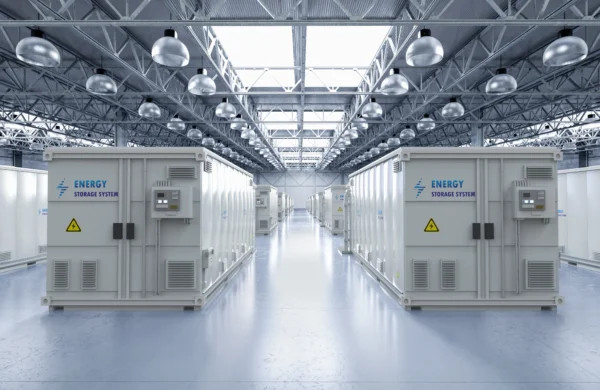
Stationary battery storage systems in industrial DC grids currently operate in voltage ranges from 400 to 1,500 VDC at power levels from 10 kW to 1 MW. To connect such storage systems to a DC bus, a high-voltage DC/DC converter performs three functions: bidirectional energy transfer (charging and discharging), inrush current limiting when connecting capacitive loads, and droop control for voltage stabilization in a network of multiple storage systems.
Important to note: The standard DDH3009-24 is primarily designed for unidirectional operation (high-voltage input → low-voltage output). For bidirectional BESS applications, we develop custom derivatives on the HV platform that can handle energy flow in both directions—with adapted control and a suitable precharge circuit. Capacitive inputs are typically connected via a precharge circuit such as our QS-ESB-300A.
Electric Mobility and High-Voltage Electrical Systems
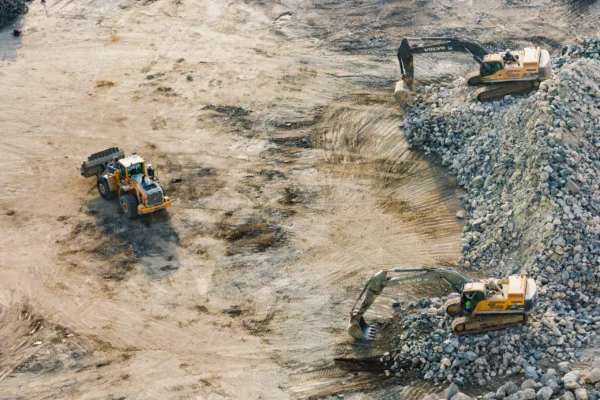
In electrified vehicles, 400V and 800V electrical systems are currently the most common—with 800V systems increasingly used in trucks, off-highway machinery, and newer passenger car platforms, as they require only half the current for the same power output, thereby reducing cable cross-sections and losses. In this application class, Querom targets commercial vehicles, off-highway machinery, and specialty vehicles—not mass-production passenger car OEMs, whose volume requirements and supply chains necessitate different structures.
When does it make sense to develop a custom high-voltage converter?
Custom high-voltage converter design is the right choice whenever one of five criteria falls outside the standard platform range. The following table helps you determine which option—standard product or custom engineering—best fits your specifications.
| Criteria | Standard DDH3009-24 | Custom-Engineering |
| Input voltage | 500 – 900VDC | different range, e.g., 100–1,000 VDC or 200–1,500 VDC |
| Power | 2 kW rated power, 3 kW boost | higher continuous power (e.g., 5–10 kW) or multiple parallel power stages |
| Bidirectionality | primarily unidirectional | bidirectional for BESS applications |
| Interfaces | CAN, RS-232, Digital-IO, HVIL | Additional Modbus, Ethernet, or custom bus connectivity |
| Mechanics | 410 × 95 × 240 mm standard enclosure | different design, cooling concept, or protection class |
In all five cases, we rely on a modular platform concept, which allows us to significantly reduce development time compared to starting from scratch. For a detailed description of the engineering process, please see Custom DC/DC Converter Development.
Request a data sheet and quote for your high-voltage converter
You can obtain data sheets, custom specifications, and customized quotes for the Querom HV platform—DDH3009-24, DDH0015, or a custom variant—in three ways:

Send an email directly to our product expert, Anton Mitterreiter: a.mitterreiter@querom.de

via Inquiry form

for an initial personal conversation by phone at +49 8743 967197-0
We look forward to receiving your inquiry and will tailor the next steps to your specific application. You will typically receive an initial response within 48 hours—including specific specification proposals, an initial configuration, and information on delivery times.
FAQs – Frequently ased questions
When selecting a high-voltage DC/DC converter, we work with you to evaluate seven criteria in a specific order: input voltage, output voltage, efficiency, galvanic isolation, interfaces, protection class, and certification. Only by following this sequence can we determine the correct configuration—standard product, custom variant, or NRE development.
Efficiency deserves special attention: It should not be evaluated at the ideal point, but rather across the actual load range of your application. You can find more information in the article Find the right High-Voltage DC/DC Converter.
Yes, the high-voltage DC/DC converters in the Querom HV platform can be operated in parallel—the modular backplane architecture is specifically designed to support this scaling path. In a typical parallel configuration, a master module controls multiple power modules, which distribute their currents via active current sharing.
The prerequisite is that all converters connected in parallel operate in the same voltage and current class and are connected via a synchronized CAN bus. This allows applications to be scaled from 3 kW of boost power in 3 kW increments up to the double-digit kilowatt range.
Galvanic isolation means that the input and output circuits are physically decoupled via a transformer (or an optocoupler for control signals)—no current flows through the wiring between the two sides. In the high-voltage range, this is mandatory because otherwise the low-voltage side (e.g., the 24V control) could no longer guarantee SELV protection against the high-voltage side. The DDH3009-24 achieves a withstand voltage of 4,250 VDC between the input and the housing reference.
In contrast, our low-voltage converters (DDL family) are explicitly designed to be non-isolated—there, a common ground reference is sufficient because both sides remain within the SELV limit. Non-isolated converters also allow for the use of less expensive components and generally achieve higher efficiency.